The short answer
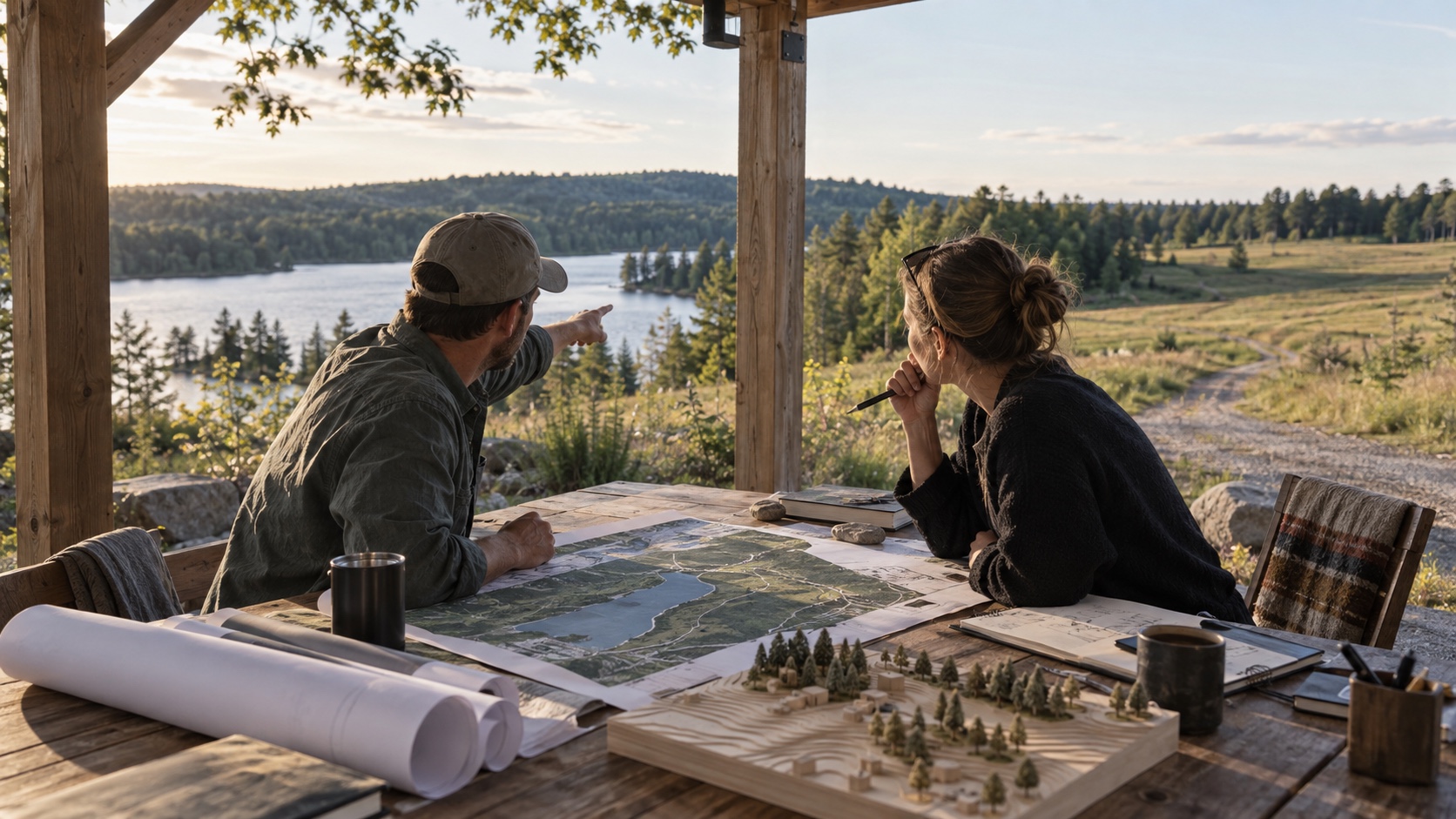
Name the destination magnet before selecting the accommodation. A natural magnet begins with a place people already want to experience. A created magnet is a designed reason to visit. Both require evidence, and a hybrid brief should state which promise carries the booking decision.
Trip reason
The cabin is the room, not the trip reason.
A memorable unit can help a guest choose a room. It rarely explains why that guest should travel to the property. The project needs a clear answer to three questions: why this place, why this property and what happens after arrival?
A photogenic structure may earn attention. It does not prove that the location can support a stay, that the guest program works in poor weather, or that the operating team can deliver the promise every week.
The American Glamping Association article “Think Outside the Tent” was the discovery source for this question. UNIKOST used it as a lead, then checked the cases below against each operator’s current official pages.
Three types
Decide what carries the booking promise.
Natural
A place people already want to experience, connected to lawful access, seasonal truth and a guest-use plan.
Created
A designed reason to visit, supported by repeatable programming, staff, safety and maintenance.
Hybrid
An existing place paired with architecture, guiding, food, wellness or another designed layer.
EcoCamp Patagonia pairs dome accommodation with guided treks and wildlife excursions in Torres del Paine. Nayara Tented Camp presents in-house naturalists and arranged Arenal activities. Their official pages connect lodging to a staffed way of using the setting. They do not prove that the same mix works elsewhere.
Treehotel combines a pine-forest setting with rooms by different architects and a seasonal activity calendar. Whitepod connects pods and cabins to a mountain property where walking and outdoor programs are part of the stay. These are hybrid relationships, not formulas to copy.
Natural test
Prove access and use, not proximity.
Record whether the experience is on the property, reached through public land, supplied by another operator or merely visible. A lake view and lawful lake access are different assets. Trails and public destinations can have hours, permits, closures and seasonal conditions.
Put the calendar in writing. Name the months, dayparts and weather conditions when the magnet is usable, plus the periods when it is weak or closed. Then document the guest route, equipment, guide or host role, mobility limits, transportation and emergency contact.
Save the current authority, land-manager or operator page with the date checked. Record every agreement or permission the concept depends on. Proximity does not turn a third-party attraction into an owned amenity.
Created test
Plan the attraction as an operating system.
Write one guest sequence from reservation to departure. Name the schedule, space, staff, equipment, cleaning, maintenance and cancellation path. For a signature activity, add supervision, guest rules, emergency response and the conditions that stop use.
APEXHAUS provides a bounded development-stage example. Its site describes a planned private villa concept organized around a controlled driving experience. Its Founding Membership Terms say the project may not yet be built, approved, permitted, open or accepting rentals. UNIKOST has no franchise, sales, resale or partnership authority for APEXHAUS.
The promise must survive repetition. Ask what the hundredth guest receives, who checks quality and what happens when the founder is absent. If the concept depends on the owner’s presence, plan it as an owner-operated format.
Case questions
Use international cases as questions.
EcoCamp, Treehotel, Nayara Tented Camp and Whitepod operate in different countries, climates and regulatory settings. Their official pages can show how an operator describes the link among place, room, guide, food and activity. They do not establish a U.S. or Canadian approval path, staffing ratio, price or expected performance.
- Which existing feature creates the first reason to travel?
- Which designed layer makes that feature usable for the intended guest?
- Which staff, spaces and site systems deliver the promise?
- What closes, fails or becomes unavailable by season?
- Which claim still needs a source or field test?
Project file
Write the magnet into the brief.
The project brief should name the primary magnet in one sentence. Add the guest, season, length of stay, required staff, key spaces, site systems and evidence. Mark assumptions unverified until a source or test resolves them.
Trace arrival, activity, service and recovery routes with the hospitality planning guide. Use the feasibility guide to test demand, authority, site, cost and operations before large commitments. The cabin comparison comes after the stay is defined.
Phase one should test the promise at a scale the operator can deliver. Keep the hypothesis dated and record what changed. An early concept is not an occupancy, revenue or return claim.
FAQ
Questions before structure selection.
Is a beautiful cabin a destination magnet?
It can become part of one, especially when architecture is the attraction. The project still needs a clear guest, a reason to choose the location, an operating plan and evidence that the whole stay works beyond the photograph.
Can a natural property have a weak magnet?
Yes. The feature may be hard to reach, seasonal, visually distant, restricted or poorly connected to the guest day. Test actual access and use instead of relying on the view.
Can a created magnet be phased?
Yes, when the first phase delivers a complete, honest version of the promise. Later phases should not be needed to make the opening stay safe or coherent.
Is APEXHAUS an operating UNIKOST project or franchise?
No. APEXHAUS is cited as a development-stage created-destination concept. Its own terms preserve material development uncertainty. UNIKOST does not claim a franchise, sales, resale or partnership role.
Does the UNIKOST calculator predict demand or profit?
No. It is a planning screen for coordination pressure and evidence workstreams. It does not calculate price, revenue, occupancy, structural loads, code compliance or approvals.
Sources
Discovery and official sources checked September 17, 2026.
- American Glamping Association: Think Outside the Tent
- EcoCamp Patagonia: lodge and programs
- Treehotel: treerooms
- Treehotel: activities
- Nayara Tented Camp: explore
- Whitepod Original: property concept
- APEXHAUS: development-stage concept
- APEXHAUS: Founding Membership Terms
Author and reviewer: Alex Green, Manager at UNIKOST. The operator pages are first-party descriptions. UNIKOST did not verify financial performance, occupancy, project approvals or the transferability of any format.
Have a property and a guest idea?
Expose the work behind the promise.
Use the planning screen to identify the site, structure and operating evidence the destination magnet requires.
Open the calculator