The short answer
Phase-one key count should describe the smallest complete guest and operating system that the land, approvals, infrastructure, team and available capital can carry through opening. A unit range copied from another property is not a project basis.
A 70-acre plan can still stop before the first cabin arrives.
Acreage and unit count are easy to remember. They are also easy to detach from the work that made them plausible. The Haven of Cadillac offers a useful public example because its proposed first phase, approvals and later pause were reported over time.
This guide uses a third-party project as an editorial case. UNIKOST was not involved in that development and has no private knowledge of its contracts, engineering or finances. The project may return on the same property or elsewhere.
Watch the 51-second field note
Check the land first.
The Reel follows the reported project sequence: preliminary approval, continued engineering and site work, then a pause as the property agreement ended. The article below separates the public facts from the planning lesson.
View the published Reel on InstagramAI-assisted presenter. Reporting source: Modern Campground, August 27, 2026.The Michigan case
The unit count was one decision inside a longer sequence.
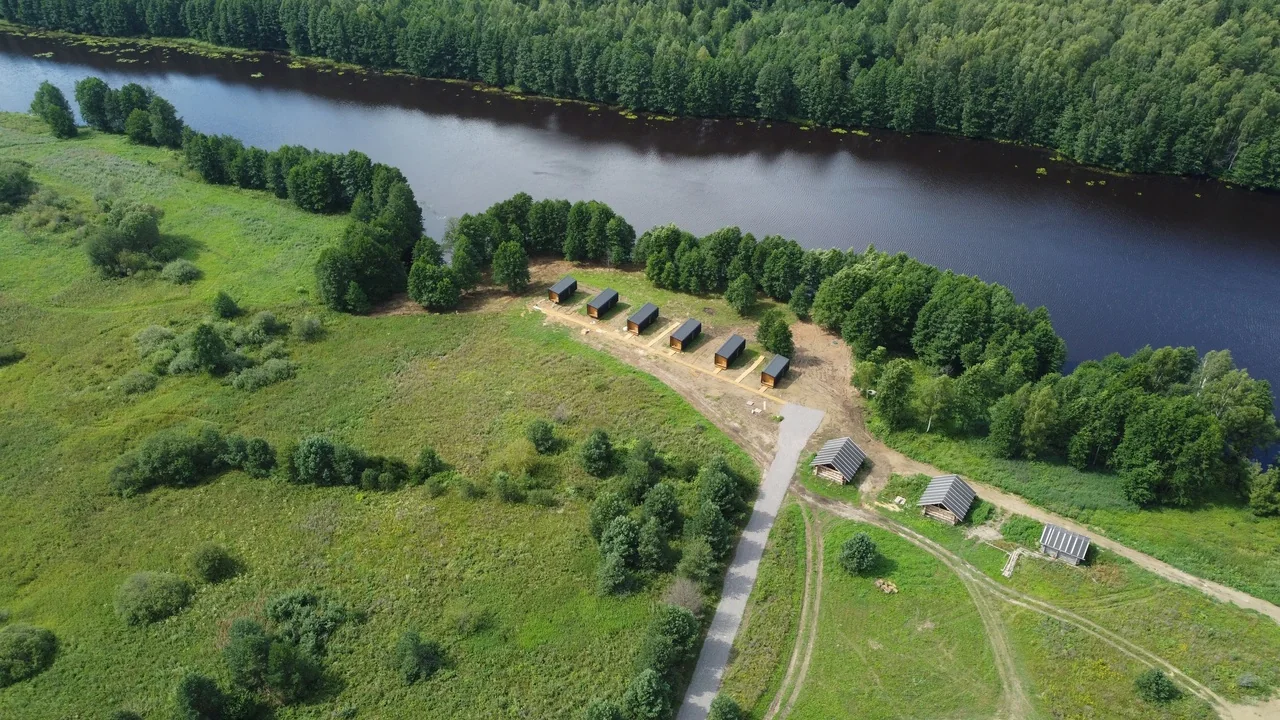
Modern Campground reported in July 2025 that The Haven of Cadillac was proposed on about 70 acres near Evergreen Golf Course in Clam Lake Township. Phase one called for roughly 15 to 20 glamping units in a central portion of the site. That was the working range. The plan still needed to move from the PUD request into detailed site review.
By December 2025, 9&10 News reported that township zoning steps had advanced and officials were waiting for site plans. The sequence changed in August 2026. Modern Campground reported that work had been suspended and the developers intended to end the purchase agreement. Engineering, a further site-plan decision, state road access and city utility requirements had remained in play, according to the report.
Reported property size
Reported Phase 1 range
Status reported August 27, 2026
Those facts do not identify one failure or prove that the proposed key count was wrong. The count still depended on land control and unfinished project work.
A complete phase
Count the system that must open with the rooms.
A small first phase may sound conservative, yet it still needs a legal use, reliable access, utilities, life-safety scope and a way to receive guests. Shared spaces, housekeeping, maintenance and booking operations may still be required. Fewer rooms do not erase those fixed systems.
Define the intended guest promise before testing a number. A quiet cabin stay, a staffed wellness retreat and an event-led property place different demands on common areas and the team. The first phase must be complete for its own offer.
Choose an opening the property can support, then place the right number of keys inside it.
Land & approvals
Start with the buildable and operable portion of the site.
Only part of the gross acreage may be usable for hospitality. Survey, title, access, setbacks, environmental conditions, drainage, topography and the proposed use shape the part of the property that can enter a plan. The responsible local authorities decide which reviews apply.
Record each approval with its formal name, written scope and the next document that it authorizes. A preliminary land-use decision may allow the team to prepare more detailed work. It does not automatically supply a final site plan, construction permits, utility capacity or permission to operate.
For a first screen, use the evidence described in Is the land ready for hospitality?
Infrastructure
Separate opening capacity from optional future capacity.
Roads, fire access, water, wastewater, power, communications and drainage can set practical thresholds. Some systems are sized close to the first phase while others may be designed with room to expand. The drawings and budget should show the split.
- Access and emergency movement for the opening layout
- Utility loads and wastewater basis for the first keys
- Guest parking, service and maintenance movement
- Commissioning and operating responsibility
- Reserved corridors or equipment space
- Future connections identified in the phasing plan
- Expansion triggers tied to evidence and approvals
- Deferred cost stated instead of disappearing
Chapter 03 explains how to keep these shared and deferred costs visible in the complete project budget.
Guest & operations
Make the first phase capable of keeping its promise.
Map one normal guest stay from arrival through departure. Then map the staff work behind it. The exercise exposes reception, housekeeping, linen, waste, maintenance, food or wellness needs that a room-only count can miss.
A small opening can test service. It may leave other questions unanswered if the long-term property depends on a larger amenity or staffing model. Write down what phase one is intended to prove.
Capital & timing
Fund the investigation and the complete opening.
The phase budget should include due diligence, professional work, approvals, site construction, utilities, logistics, installation and pre-opening needs. It also needs dated assumptions and named allowances for work that has not yet been designed.
Match commitments to evidence. A structure reservation, land closing, site contract and utility order carry different risks. The owner can set decision gates so that each commitment follows the information required for that step.
Decision file
Keep the key count attached to its assumptions.
The first-phase file should state the property, proposed use, guest offer, structure pathway, drawing basis, utility concept, shared spaces, operating plan and budget date. Add every known dependency and the evidence needed to close it.
The intended use has a documented local review path.
The current parcel agreement supports the work ahead.
Access, drainage and utility concepts can serve the first opening.
Shared spaces and guest services fit the first operating model.
The budget carries the project through opening, not only unit delivery.
Future expansion remains possible without pretending it is already approved.
Revisit the number when a site boundary, authority requirement, utility basis, operating promise or capital condition changes. Keep previous versions so the owner can see why the phase moved.
Frequently asked
Questions before a key count becomes a plan.
Is 15 to 20 units a standard first phase for glamping?
No. It was the reported first-phase range for one proposed 70-acre project in Michigan. A different property may support fewer units, more units or no hospitality use after site and authority review.
Does preliminary approval lock the final key count?
No. The exact effect of an approval depends on the jurisdiction and written decision. Final site plans, engineering, access, utilities, permits and property control may still change the buildable scope.
Should phase one include infrastructure for future phases?
Only when the approved phasing plan, engineering and capital strategy support it. Separate capacity needed for the first opening from optional future capacity so the owner can see what is being funded now.
Can a very small opening prove demand?
It can provide useful operating evidence, but it may not test the staffing, amenities or fixed-cost structure of the intended full operation. Define the question the first phase is meant to answer before using it as proof.
What should an owner bring to an initial project review?
Bring the property location, approximate acreage, survey or parcel map if available, current use, intended guest, access and utility information, target opening horizon and the budget range available for investigation and delivery.
Sources & limits
Use the case as bounded evidence.
Sources were checked on September 3, 2026. News reports support the published chronology and project figures used here. They do not reveal the complete private decision record, and this guide does not assign a cause to the project pause.
- Modern Campground: The Haven of Cadillac development put on hold (August 27, 2026)
- Modern Campground: proposed Cadillac-area resort enters planning phase (July 25, 2025)
- 9&10 News: luxury glamping resort proposed for Clam Lake Township (December 11, 2025)
- Clam Lake Township: planning and master-plan resources